The Royal Astronomical Society of Canada, the Friends of the DAO and the Royal BC Museum present
International Astronomy Day
at the Royal BC Museum and Observatory Hill, Victoria, BC, Canada
Saturday, April 25, 2026
Amazing Astronomical Activities for all Ages!
Free admission (regular rates apply to Museum exhibits)
International Astronomy Day events for 2026 will take place Saturday April 25 at the Royal BC Museum (RBCM) from 10:00 a.m. to 3:00 p.m., and at the Dominion Astrophysical Observatory (DAO) and the Centre of the Universe from 7:30 p.m. to 11:00 p.m.
The Victoria Centre of the Royal Astronomical Society of Canada (RASC) presents family-friendly Astronomy Day activities at the RBCM with solar telescopes for safely viewing the Sun outdoors in front of the museum on Belleville St. Inside the RBCM there will be displays from the University of Victoria Physics and Astronomy Department, Camosun College, the Shawnigan Lake High School, and the Centre of the Universe. RASC volunteers and Science Venture staff from the University of Victoria will engage children with hands-on activities.
“International Astronomy Day is about making space science accessible to everyone,” said Randy Enkin of the RASC Victoria Centre. “From safely viewing the Sun during the day to exploring the night sky through telescopes, these events are designed to spark curiosity and connect people with the universe around them.”
All the astronomy and responsible lighting presentations, displays and workshops are free, while regular admission still applies for regular RBCM exhibits and films. The RBCM will show astronomy-related IMAX films on Astronomy Day.
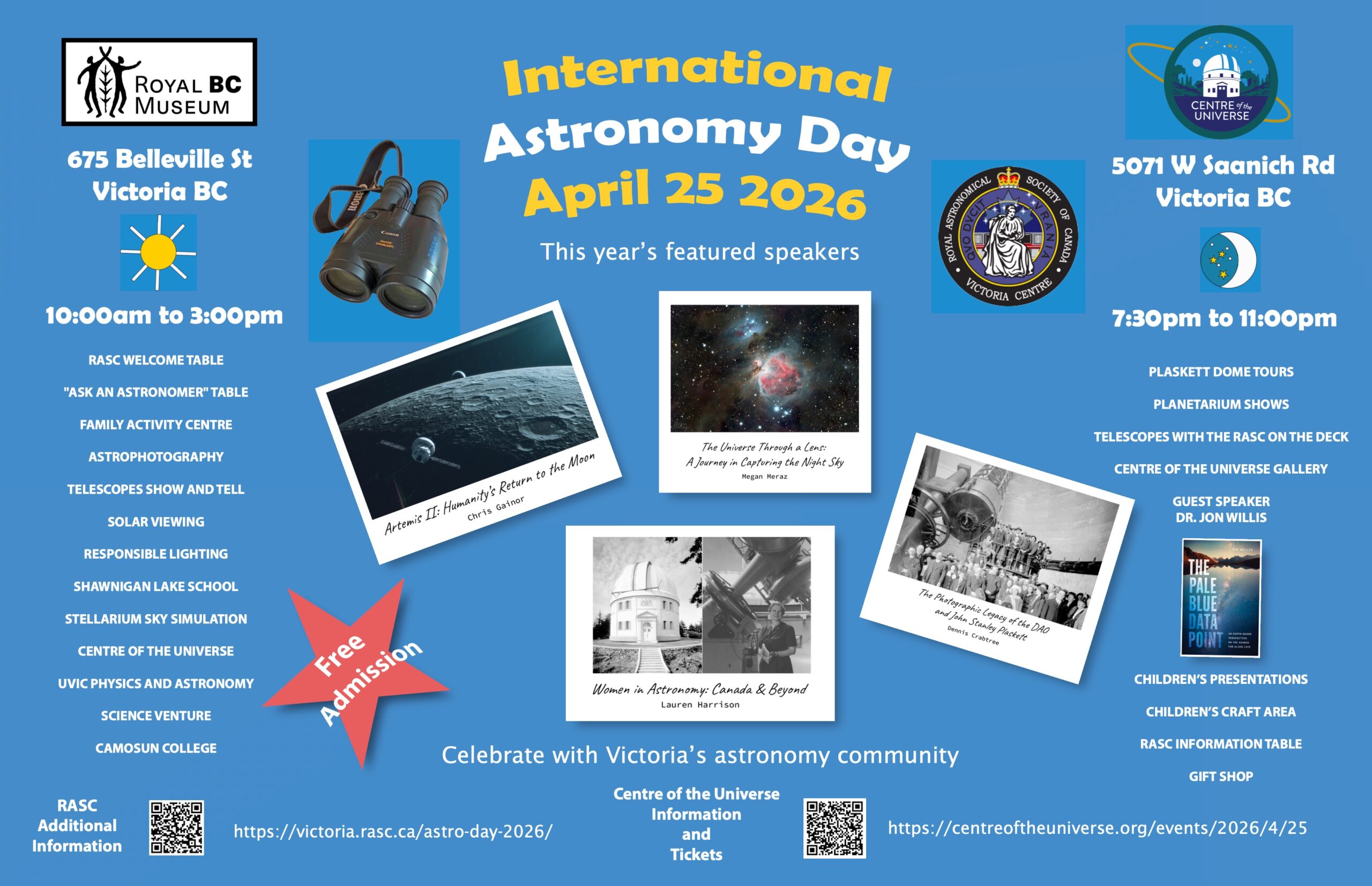
Royal BC Museum – 10AM – 3PM
Activities
Interactive activities outside on the plaza
- View the Sun safely through solar telescopes (weather permitting)
- Ask an Astronomer – find answers to those questions about astronomy and space you always wanted to ask
Interactive activities inside in Clifford Carl Hall (Museum main level)
- RASC Welcome Table – ask questions, receive information about the RASC, find out how to use a Star Chart.
- Telescope show-and-tell – try out a variety of telescopes and ask questions
- Astrophotography – find out how to use your camera to take photos of the night sky and see our members’ work
- Children and families astro crafts – kids can make their own astronomy and space souvenirs
- Ask an Astronomer – find answers to those questions about astronomy and space you always wanted to ask
- Responsible Lighting – get pointers on how to reduce your own light pollution, and preserve our natural environments in the Victoria area.
- UVic Astronomy & Physics – interactive astronomy, information and new technology with students from UVIC
- Science Venture – Have some fun with hands-on, minds-on science, engineering and technology. Experience the Spiro Mars Rovers (robots)!
- Camosun College Astronomy – Displays, activities and information on astronomy courses and university transfer
- Shawnigan Lake School – Students will display astrophotos taken with their dedicated telescope and discuss all things cosmological!
- Stellarium Sky Simulation –an interactive planetarium program on a large screen to help you explore the Universe
- Centre of the Universe – Friends of the Dominion Astrophysical Observatory will give you information about Star Parties, community and school tours and special events up at the Centre of the Universe. Come and say Hi to our Celestial Buddies.
- Give Away Table – Come and browse through books, magazines, science resources, posters and take away something to look through on rainy nights.
- Artemis 2 Display – Still excited about the recent Moon expedition of Artemis 2? Find out more about the Lunar Mission and ask questions about what’s next.
Cosmic Series at IMAX – Celebrate Astronomy with a cinematic voyage through space. Regular admission rates to IMAX apply.
- Asteroid Hunters 11 am
- A Beautiful Planet 3D 1 pm
- Deep Sky 3 pm
Speakers
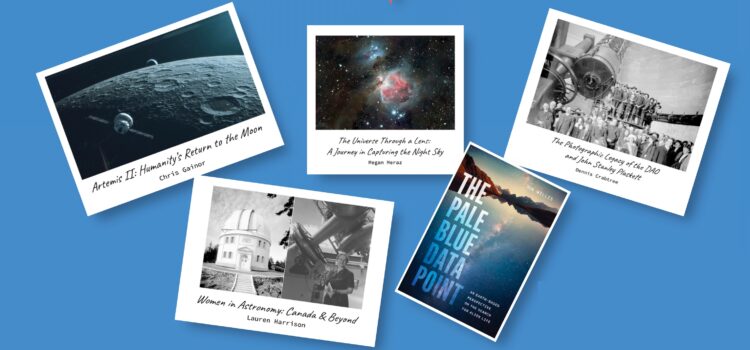
The Universe Through a Lens: A Journey in Capturing the Night Sky – Megan Meraz
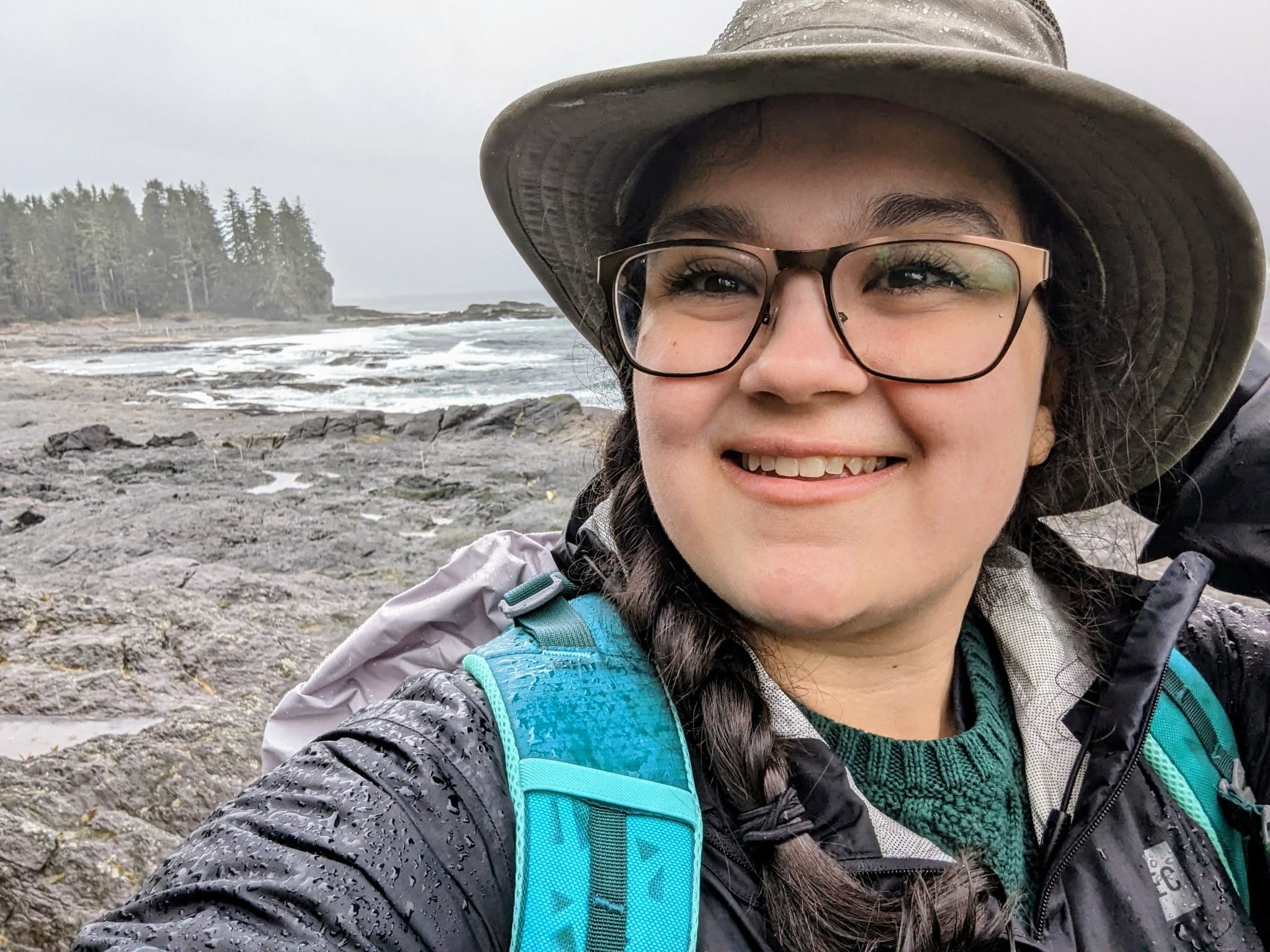
Astrophotography can seem like a daunting hobby, but it’s more about the journey than the destination. I’ll share my 15-year journey, from blurry beginnings to where I am today after many starts, stops, and gradual improvements. I will share what I have learned about how to capture the night sky, from finding objects to photographing, tracking, and processing them. I’ll also highlight how accessible astrophotography has become today, with a wide range of options for anyone to begin capturing the universe.
Bio: Megan Meraz is an amateur astrophotographer and a proud member of the Royal Astronomical Society of Canada (RASC). She holds a Bachelor’s degree in Physics and Astronomy from the University of Victoria. She aims to spark curiosity about the universe and encourage others to explore astronomy in their own way, no matter their starting point.
Artemis II: Humanity’s Return to the Moon – Dr. Chris Gainor
Bio: Chris is an historian of technology specializing in space exploration, astronomy, and Cold War military technology. He has a PH.D in history from the University of Alberta. He is the author of six books. His latest book ‘Not Yet Imagined’ was published by NASA, and is a study of Hubble Space Telescope Operations. He remains active in the RASC having served as National President and as President of the Victoria Centre.
Women in Astronomy: Canada & Beyond – Lauren Harrison
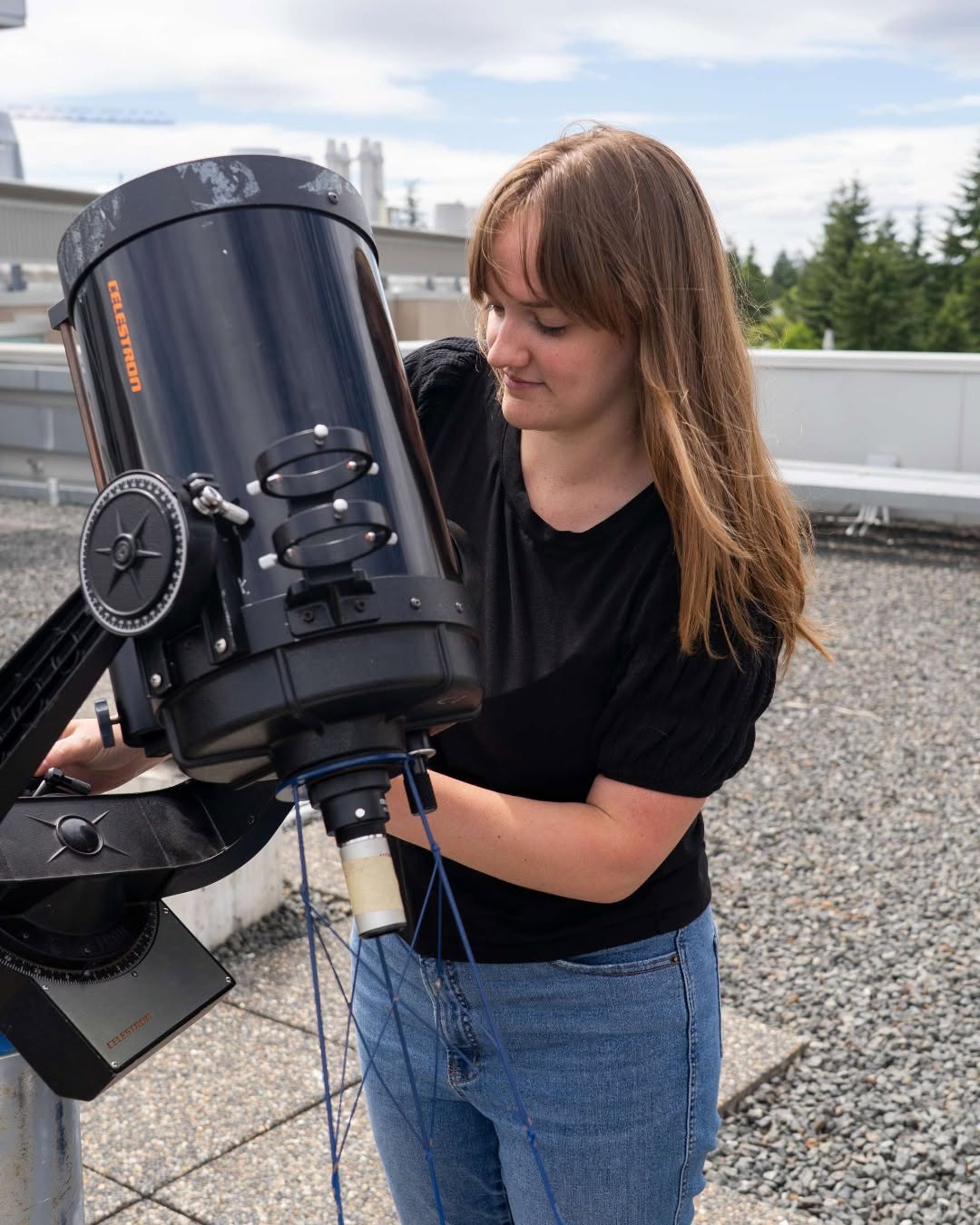
This talk explores the influential women in astronomy who have shaped the field. This talk highlights Canadian and global figures, both past and present, and looks ahead to the future of astronomy.
Bio: Lauren is a 4th year Physics and Astronomy student at the University of Victoria. Lauren has had previous experience in astronomy research, working under the direction of Dr. Kim Venn, where she studied the metallicities and radial velocities of stars in ultra-faint dwarf galaxies. This summer, she is thrilled to be travelling to Montreal to work at McGill University, where she is participating in exoplanet research. In her free time, Lauren enjoys getting involved in astronomy outreach, and competing in triathlon races.
The Photographic Legacy of the DAO and John Stanley Plaskett – Dr. Dennis Crabtree

The Dominion Astrophysical Observatory (DAO) holds a significant collection of historic photographic material, including approximately 150 glass plates documenting the site and the telescope’s construction between 1914 and 1918.
Additionally, John Stanley Plaskett was an accomplished photographer who served as Vice-President of the Toronto Camera Club and conducted some of Canada’s earliest work in color photography. A few hundred of his personal photographs from 1910–1914 were recently discovered at the DAO.
This presentation will showcase these historic photographs while exploring their unique stories and historical significance.
Bio: Dr. Dennis Crabtree is a former Director of the Dominion Astrophysical Observatory (DAO). During his career, he also worked for the Canada-France-Hawaii Telescope, the Space Telescope Science Institute, and the Gemini Observatory. Now retired, he is the unofficial historian of the DAO, exploring the rich history of the observatory that established Canada in the field of astrophysics.
Centre of the Universe – Observatory Hill – 7:30PM – 11PM
(Free) Tickets are required to attend this evening – Event Info
The Pale Blue Data Point: An Earth-Based Perspective on the Search for Alien Life – Dr Jon Willis, University of Victoria
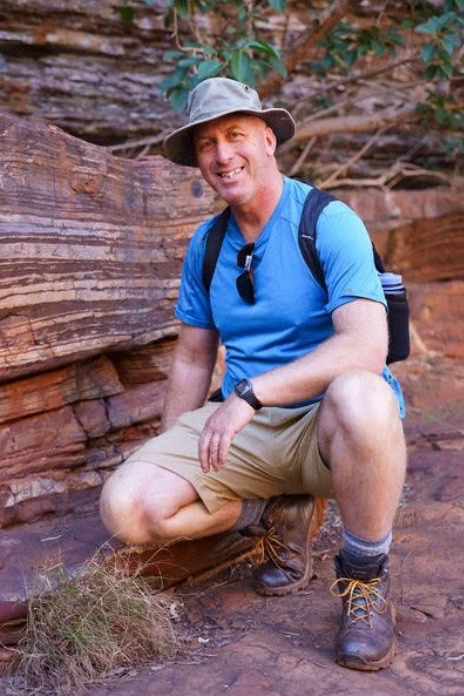
Is there life off Earth? Bound by the limitations of spaceflight, a growing number of astro-biologists investigate the question by studying life on our planet. Astronomer and author Jon Willis shows us how it’s done, allowing readers to envision extraterrestrial landscapes by exploring their closest Earth analogs.
With investigations ranging from meteorite hunting to exoplanet detection, Willis conjures up alien worlds and unthought-of biological possibilities, speculating what life might look like on other planets by extrapolating from what we can see on Earth, our single “pale blue dot”.
Bio: Dr. Jon Willis is a professor of astronomy at the University of Victoria and author of The Pale Blue Data Point: An Earth-Based Perspective on the Search for Alien Life and All These Worlds Are Yours: The Scientific Search for Alien Life.
Jon will be signing copies of the book during the evening