- Intro –Peter Jedicke
- London Centre members online: Norm McCall, Millie Norry, Diane Jedicke
- Large Binocular Telescope – Gilbert Esquerdo, Tucson Arizona
- Located atop of Mt. Graham at 3,200m altitude, near Stafford, Arizona
- Gil was a Mt. Hopkins Telescope observer (1.2m aperture) until recently
- Virtual tour of the Large Binocular Telescope
- 10-storey tall building, which moves
- Two 8.4m mirrors f/1.125, Gregorian design with second ‘Bent’ optical path
- 1 instrument at Gregorian focus, 4 instruments on ‘Bent’ optical path
- Interferometry can be measured using both mirrors
- C-14 used as a “seeing” monitor
- Operational Specialist Observer – Gil’s position
- Lots of actuators to ensure mirrors remain in figure during use
- Waveform sensors ensure real-time collimation
- Spectroscopy is the main mission of the telescope
- Adaptive optics used
- Alt-Az mount with image rotators
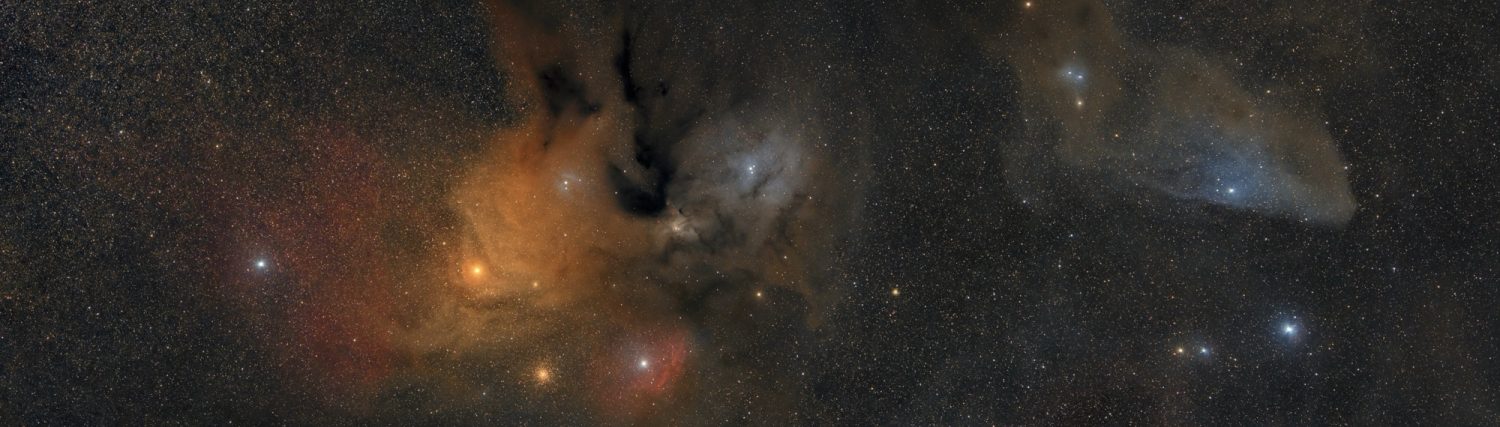
- Some sample images taken with the telescope
- Q&A
- Transcript: Large Binocular Telescope – Gilbert Esquerdo
- Artemis 2 Mission Images – Phil Stooke
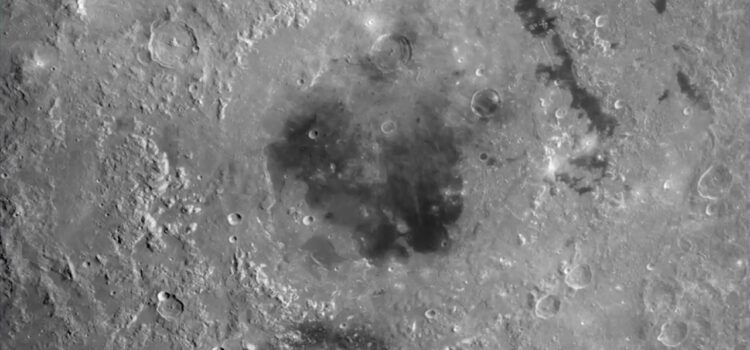
- 1965 images taken by the Soviet Zone 3 mission
- Mare Orientale – subject of great scrutiny during the Artemis 2 orbit
- More Mirnoe – the peaceful sea below Mare Orientale, a pyroclastic deposit
- Very similar to the many bright rings showing pyroclastic deposit on Jupiter’s moon Io
- Catenae (crater chains)
- Solar Eclipse
- Artemis 2 observed and photographed the eclipse from lunar orbit
- Gene Cernan sketched the streamers during the 1972 Apollo 17 mission, which are visible in the Artemis 2 images. At the time, the streamers were thought to be caused by Moon dust.
- Looking back at the Moon showing Mare Serenitatis
- Preliminary science report from the Artemis 2 mission will be released in about 5 months
- Both Soviet and USA lunar orbiter early missions used film to record images, developed onboard and scanned with an interferometer
- Lunar Puzzle – Randy Enkin
- Randy was given a puzzle of the Full Moon by Brian Barber
- Took the puzzle to his place of work’s break room – took 3 months to complete!
- The specular reflection from the middle of the Moon’s surface made the puzzle difficult
- Dave Payne used the geometry of the puzzle pieces to help him solve it
- Puzzle is available to anyone interested in a challenge
- Events
- Astronomy Day – this Saturday, April 25
- Give Away Table – books, magazines and posters
- Randy interview at CFAX tomorrow at 8:20AM
- Speakers: Dennis Crabtree, Chris Gainor, Lauren Harrison, Megan Meraz, Jon Willis
- Royal BC Museum during the day and Centre of the Universe in the evening
- IMAX is showing astronomy themed presentations
- A few more volunteers would be nice, especially for setup and tear down
- Videos being produced for event promotion on social media and from our website
- Please print a poster and put them up locally
- RASC General Assembly – May 2-3 – Lauri Roche
- ~Register~ and pay $25 for members
- May 2 Saturday – presentations
- May 3 Sunday – workshops
- Astrophotography SIG – this Wednesday – Dave Payne
- Astronomy Day – this Saturday, April 25
- RASC Victoria’s Astronomy Equipment – David Lee
- Sid Sidhu’s garage is slowly being emptied
- Catalogue made of most everything
- Thanks to members who took away lots of the equipment on a “long term loan” basis
- Garry Sedun’s New Observatory report
- Discovered a cracked 25″ mirror
- Hopefully insurance will cover a replacement
- Garry still has a 20″ Newtonian telescope to use
- Hume Cronyn Memorial Observatory – Peter Jedicke
- On the campus of Western University
- Mrs. Cronyn donated the funds to build the observatory in 1938
- Perkin-Elmer 25cm refractor with Schmidt camera in a 20′ dome built in 1940
- Dresden meteorite fell nearby on July 11, 1939, piquing public interest in astronomy
- Research started in 1950 when Prof William Wehlau arrived
- A new engineering building will obscure the observatory’s eastern sky completely
Video recording of meeting
Astronomy Cafe – April 20, 2026

