Intro and New Members – David Lee
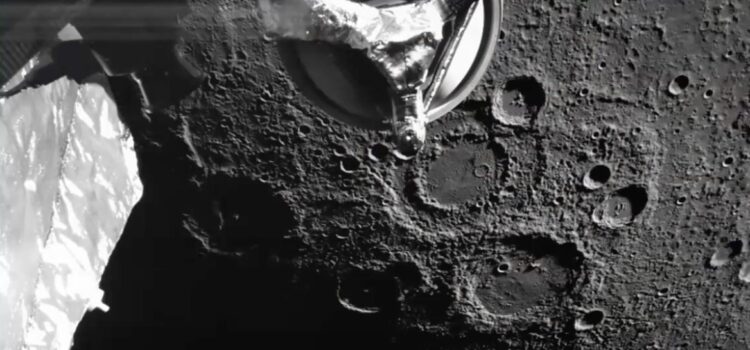
What’s up in the solar system in 2026 – Phil Stooke
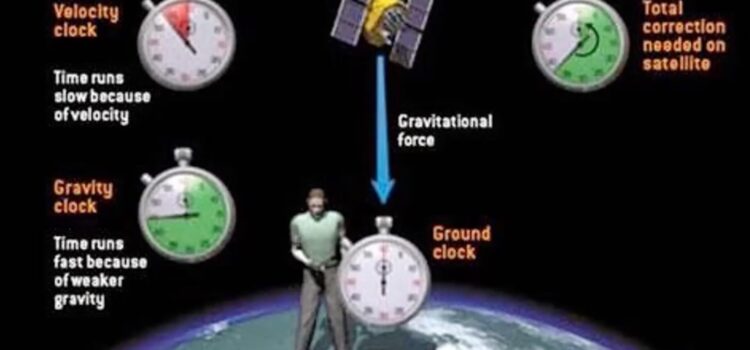
Risk of Satellite Collision or “Fall” – Jeff Pivnick
Events – Kevin Bertles, Randy Enkin, Lauri Roche
Astronomy Cafe – Jan 12, 2026


Intro and New Members – David Lee
What’s up in the solar system in 2026 – Phil Stooke
Risk of Satellite Collision or “Fall” – Jeff Pivnick
Events – Kevin Bertles, Randy Enkin, Lauri Roche

Date/Time: Wednesday January 14, 2026 starting at 7:30PM Location: University of Victoria, Bob Wright Centre, Lecture Theatre A104
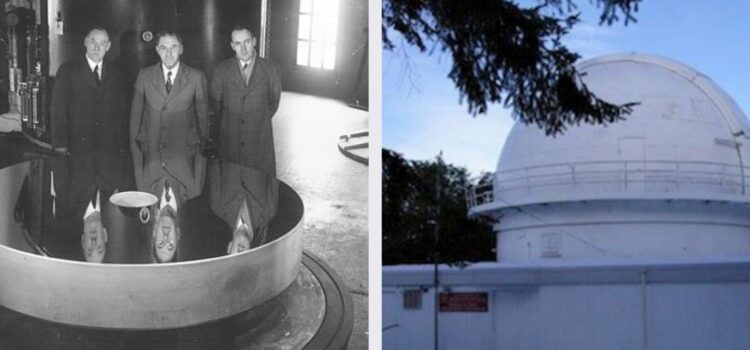
You may be familiar with the 1.8m Plaskett telescope at the Dominion Astrophysical Observatory (DAO), but it is not the only noteworthy telescope on the hill. Located just across the road from the visitor’s centre, the 1.2m telescope and McKellar spectrograph has a vibrant history as well. Its namesake, Andrew McKellar, did lots of important work with spectroscopy at the DAO and designed the telescope’s coudé spectrograph. It saw first light in 1962 and has been in use for active research ever since. This talk will dive into Andrew McKellar’s research, his design of the coudé spectrograph, how spectroscopy works, and the role it has played in past and present astronomy research.

Intro and New Members – Marjie Welchframe; Astronomy vs The Billionaire Space Race – Samantha Lawler, USask; Astrophotos – Dave Payne; Space News – Chris Gainor; Rockets – Myles Morrison.

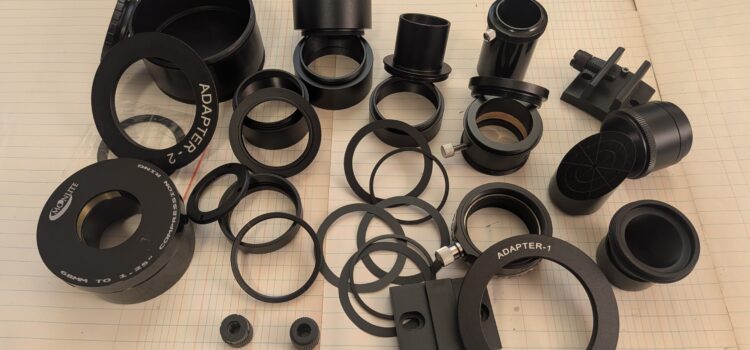
If you’re an astro-photographer, you’ll get it: you never have the right connector, adapter or spacer. I’m getting out of the hobby and willing to part with a huge collection of miscellaneous spacers and adapters. I’m even throwing in a 12mm illuminated reticle, worth the price of this collection alone.

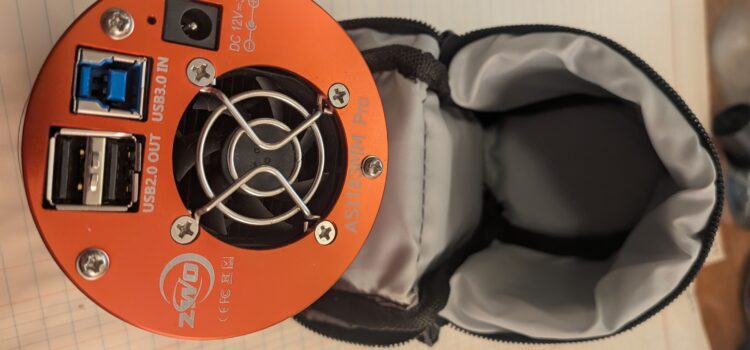
This mono CMOS camera is one of the most sensitive and efficient astro cameras available with peak QE reaching 84%. The sensor diagonal size is 15.86 mm for approx. 20.48M-effective pixel. It is cooled, and has a 256MB DDR3 memory

Excellent condition – complete with plastic container The Pentax SMC XW10 is a premium 10mm, 1.25-inch astronomical eyepiece featuring a 70-degree apparent field of view, 20mm eye relief, and high-refraction, extra-low-dispersion lanthanum glass. It uses SMC multi-coating for >90% light

Selling a bunch of astronomy equipment due to upgrades! Victoria buyers preferred, but shipping can be discussed. $450 – Canon T5i $250 – Optolong L-enhance Canon clip-in duo band filter $200 – Askar C1 and C2 2″ duo band filter

December 22 at 19:00: Informal Astro Café. On-line only! No host, no video recording or notes, but good old conviviality. Same Zoom link as always. NO ASTRO CAFE ON DECEMBER 29. Video recording of meeting

Intro & new attendees – Lauri Roche; Upcoming Astronomy Cafes – Randy Enkin; Astrophotography and 16″ CU telescope upgrades – Brock Johnston; Geminid Meteor Shower in 2014 – Reg Dunkley; The Week That Shaped Astronomy in Victoria – Dennis Crabtree; Newcombe Singers Concert – Randy Enkin; Mizar (and friends) – binary stars – Randy Enkin

Date/Time: Wednesday December 10, 2025 starting at 7:30PM Location: University of Victoria, Elliott 162. Park in Lot 1 (pay parking) and cross Ring Road – please note the room change!
Much of the universe is very cold, more than 100 degrees below zero Celsius, and cannot be seen by even giant optical or infrared telescopes like Hubble or the James Webb Space Telescope. Instead, we need specially designed telescopes that can detect the cold universe. In this talk we’ll learn about how we can detect cold matter, Canada’s pioneering work in this field, and finally the Atacama Large Millimetre/Submillimetre Array (ALMA), a giant telescope in northern Chile, what it’s like to work there, and some of the really cool stuff it’s discovered.